
Wobbly Days
A week of tears, school fences, hard truths, and the unexpected grace of still showing up.

Wobbly is how my seven-year-old describes his feelings when he can’t quite find the words for what’s going on inside him.
Not sad.
Not angry.
Not frightened.
Just… wobbly.
I’ve had a lot of wobbly days this week.
The kind where your legs feel like jelly, your chest feels bruised from the inside, and tears arrive at the most inconvenient times — in the car, in the kitchen, halfway through answering a perfectly normal question. The kind where grief sits in your body before it ever reaches language.
We all know grief destabilises us. We know it isn’t linear. We know it doesn’t politely arrive in stages and then leave us alone.
My wobbly days have been very much inside me, and very much in front of me.
And yet, even in the wobble, I want to celebrate the small acts of this week.
Because this week, I showed up.
I’m trying to co-exist with the man I’ve known for thirteen years — the man who has been my husband, my best friend, my history. This isn’t really about the shock of a separation or a divorce I didn’t plan. That’s a bigger story for another day.
This is about what it means to keep moving through a week when your insides feel unsteady.
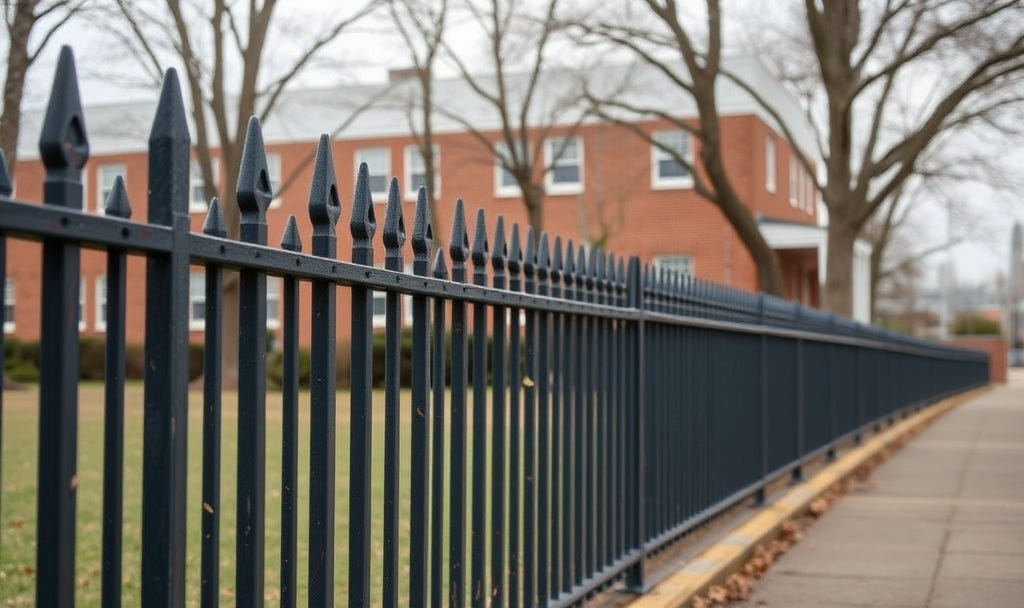
This week, I went to my child’s school play. Like many school events, it involved joy, chaos, questionable timing, and a logistical crisis. I had to dash off to collect my other child, and the only way out quickly was to jump a very high school fence.
Unapologetically, I handed my bag to another school dad and said, in effect, hold this while I work out whether I’m about to land gracefully or get rushed to A&E.
Suffice to say, at 45, I can still jump fences.
You don’t need to know why this is a skill I possess. I always knew it would come in handy.
Later that same week, I saw a teaching job advertised.
Ordinarily, I’d have the confidence to apply. But this school once offered me a job, and years ago I pulled out a week before starting because my life was — well — spectacularly wobbly. The old me would have drowned in embarrassment. The old me would have avoided the whole thing. The old me would have let shame decide.
Instead, I emailed the headteacher directly and asked for a chat.
I wanted to apologise. I wanted to clear the air. I wanted, perhaps for the first time in a long time, to meet my own past without flinching.
He surprised me.
But if I’m honest, I surprised me more.
He was warm, open, kind. We chatted. We laughed. And he ended the conversation with a huge smile and said, I look forward to seeing if you apply.
There are moments in adult life that feel tiny from the outside but tectonic from within.
That was one of them.
Then I had to deliver a community writing workshop for young people in foster care.
This work matters to me more than I can say. I care deeply about giving voice to those who are too often labelled, managed, misunderstood, or written off. But I was wobbly by the time I arrived. Anyone who works in community spaces knows this feeling — you never quite know who will turn up, whether they’ll trust you, whether they’ll hate you, whether the room will hold.
But they came.
And it was an enormous privilege to hear their stories — their humour, their grit, their chaos, their honesty, their spark.
One young woman arrived holding her baby and just a sliver of hope.
What she told me floored me.
When she said she’d been “on the streets” since she was eleven, I thought I understood what she meant. I imagined her running away from placements, wandering, trying to make sense of life in strangers’ houses, trying to outrun the ache of not belonging.
That isn’t what she meant.
She said two words that changed the gravity of the ground I was standing on.
“I’ve been on the game.”
In plain terms, she had sold her body to survive.
I looked at her holding her baby and felt that familiar, terrible recognition — the one that says: the system has failed again. Not abstractly. Not statistically. Not in a report. In flesh. In breath. In a young woman’s voice.
I was wobbling, and then she said something I won’t forget:
“I don’t like sex because I was touched before I was allowed to touch myself.”
There are sentences that split a room open.
And yet there she was — still standing, still writing, still laughing, still holding her child.
She asked me about my life, and for a moment my own wobble stopped mattering. Not because it disappeared, but because something more important was happening.
She looked at me, smiled wildly, and said:
“I think you’re amazing. And I’m telling you — you don’t need a man.”
I laughed.
Then she asked me when I was coming back.
She shared some of her writing, and I was stunned — not just by the tragedy of what she had survived, but by the force of her courage. By the craft. By the raw, unteachable instinct of someone writing because language might be the only thing left that belongs to them.
I told her I was once like her.
And I told her that if I’d had even a fraction of her attitude at that age, it might not have taken me so long to learn that I had confused self-esteem with self-worth.
That’s the thing about the back room of a community centre.
Sometimes the most important work in the world is happening there.
No spotlight. No grand speech. No polished stage.
Just people showing up.
A pen.
A baby.
A story.
A room that says: you can speak here.
And maybe that is the work.
Maybe the work is simple.
I show up.
I listen.
And little by little, I tell her that despite the wobble, despite the labels, despite what has been done to her and said about her, she is extraordinary.
This week, while my own life has felt like I’m standing on the deck of a storm-hit ship, it was young people like her who reminded me what I needed to remember.
It’s okay to wobble.
Wobble is not weakness.
Wobble is not failure.
Wobble is not the end of the story.
Sometimes wobble is just what happens when your life is trying to re-balance itself around a truth you can no longer ignore.
So if you’re having wobbly days too, here’s what I’m learning:
You can cry in the car.
You can jump the fence.
You can send the email.
You can walk into the room shaking.
You can still be useful.
You can still be kind.
You can still be brave.
You can still show up.
And sometimes, that is more than enough.

Showing up and listening are two important accomplishments.
Gaby, your wobbly words have moved me deeply. Thank you so much. And what a fine writer you are.